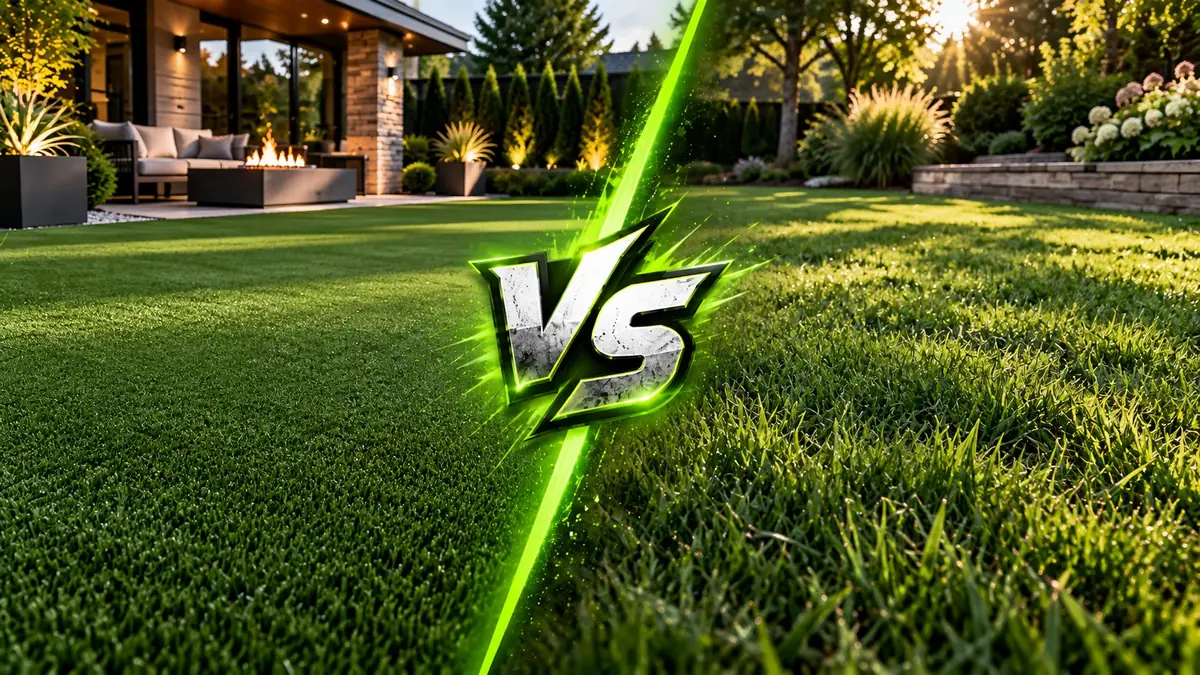
A natural lawn is cheaper to put in, cooler underfoot and good for the environment. Artificial turf costs more upfront but stays green, flat and mud-free with almost no upkeep. Neither is right for every yard. The best choice depends on how you use the space, how much sun and traffic it gets, and how much time you want to spend on it.
The short answer
| Natural grass | Artificial turf | |
|---|---|---|
| Upfront cost | Lower | Several times higher |
| Weekly upkeep | Mowing, watering, fertilizing, weeding | Occasional brushing, rinsing and debris removal |
| Water | Needs regular watering in summer | None, apart from rinsing |
| Heavy use, kids and dogs | Wears thin, bare patches and mud | Stays even, no mud |
| Shade | Struggles to grow | Not affected |
| Summer heat | Stays cool | Can get very hot in direct sun |
| Environment | Cools the air, absorbs rain and CO2, supports insects | Saves water and chemicals, but it’s plastic that must be replaced eventually |
| Lifespan | Renews itself with care | Well over a decade for quality residential turf, less with heavy use |
Cost: upfront vs. over time
Sod or seed is the cheaper option on day one. Artificial turf costs several times more to install, mostly because of the material and the base preparation underneath it.
A natural lawn keeps costing money every season, though: water, fertilizer, weed control, seed to fill bare spots, a mower and fuel, or a lawn service. Turf has almost none of those costs. How quickly it pays for itself depends on how much you currently spend keeping your lawn looking good, and how long you plan to stay in your home.
Maintenance: what each one really takes
Grass needs regular mowing from spring to fall, watering in dry spells, fertilizing, weed control and overseeding when patches thin out. Many West Island municipalities also limit when you can water your lawn in summer, which makes keeping grass green in July and August harder.
Artificial turf isn’t zero-maintenance, but it’s close. Expect to blow or rake off leaves, rinse it now and then, brush the fibres upright in high-traffic spots, and top up the infill every few years. No mowing, no watering, no fertilizer.
How each one handles a Montréal winter
Grass goes dormant under the snow. In spring it can come back with snow mould, matted patches and soft, muddy areas where meltwater sits, and it usually needs a clean-up and some reseeding before it looks good again.
Artificial turf stays green all year. Snow can simply be left to melt, or cleared with a plastic shovel; avoid metal edges and chipping at ice, which can damage the fibres. What matters most is what’s underneath. If the base doesn’t drain, meltwater sits under the turf, freezes and lifts it. That’s why we build turf the same way we build paver projects: excavated, with geotextile fabric and a compacted, free-draining stone base, using Alliance Gator turf products. Spring melt drains straight through, and the surface stays level. Read more about why drainage is everything under a Montréal surface.
Summer heat
This is turf’s biggest drawback. In full afternoon sun, artificial turf gets much hotter than grass, often too hot for bare feet or paws. A light rinse cools it quickly, and it’s less of an issue in areas that get afternoon shade. If the space is in full sun and kids play there barefoot at midday, grass or a mix of both may be the better call.
Kids and pets
Turf is hard to beat for heavy use. It doesn’t wear into bare patches or turn to mud after rain, so kids and dogs come inside cleaner. For dogs, choose a pet-friendly product and rinse urine areas regularly to keep it fresh. Under play structures, turf needs a proper shock-absorbing pad underneath to be a safe landing surface, so let your installer know if you’re planning a swing set or climber.
Grass is softer and cooler, but a high-traffic lawn with a dog will almost always develop bare spots and muddy paths.
The environmental trade-off
Natural grass cools the air around it, absorbs rainwater and carbon dioxide, and supports insects and soil life. It also uses a lot of water and often fertilizers and weed killers. Artificial turf saves all that water and chemical use, but it’s a plastic product that eventually has to be replaced and disposed of. If environmental impact is your top priority, a healthy natural lawn, or planted beds, usually wins.
When natural grass makes sense
- Large, sunny yards where cost per square foot matters most
- You enjoy lawn care, or already have a lawn service you’re happy with
- Areas where kids or pets spend a lot of time in full midday sun
- You want the most natural, eco-friendly option
When artificial turf makes sense
- Shaded yards and side yards where grass won’t grow
- Dogs, kids and heavy traffic that keep wearing a lawn down
- Small backyards, around pools and patios, and next to pavers where you want clean, even edges
- You want a yard that looks the same in April as it does in August, with almost no upkeep
Many backyards use both: turf in the hard-working areas near the patio and play space, and grass or planted beds further out.
Frequently asked questions
Is artificial turf worth it in Montréal?
It can be, especially for shaded yards, dogs, kids and small backyards. It costs more upfront than grass but needs no mowing, watering or fertilizer, and it stays green and mud-free from spring to fall. The key is a proper draining base so it stays level through freeze-thaw.
What happens to artificial turf in the winter?
It sits under the snow like a lawn does. You can let snow melt or clear it with a plastic shovel. On a free-draining base, meltwater runs straight through in spring instead of pooling or freezing under the turf.
Does artificial turf get hot?
Yes. In full afternoon sun it gets much hotter than grass. A quick rinse cools it down, and it stays cooler in areas with afternoon shade.
Is artificial turf good for dogs?
Yes. It doesn’t wear into bare patches or mud. Choose a pet-friendly turf and rinse urine areas regularly to keep it fresh.
How long does artificial turf last?
Quality residential turf on a good base typically lasts well over a decade. Very heavy use and cheaper products shorten that.
Planning a bigger backyard project? See our comparison of pavers vs. asphalt driveways.
Not sure what fits your yard?
We’ll look at your sun, drainage and how you use the space, then show you turf, grass and patio options in 3D. The consultation is free.